
Our Forever Priest
by Jonathan Molengraf
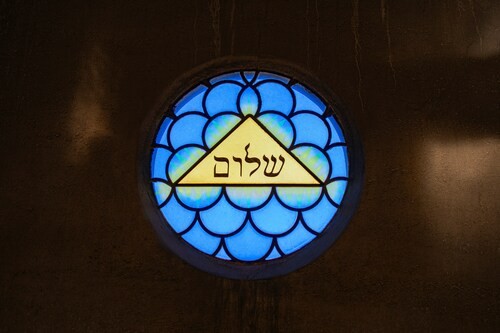
In late September to early October, many of us get excited for football season, pumpkin spice lattes, and for the Texas heat to finally dip into the 80s. But for our Jewish neighbors, this time of year marks preparation for their most holy day, Yom Kippur. The term means “Day of Atonement” and originates from when Israel sinned by worshiping the golden calf. Moses ascended Mount Sinai again to intercede on behalf of the people for another forty days. When he came down, his face shone, and he carried the Ten Commandments in his hands.
Historically, the Jewish people have commemorated that day each year by fasting for twenty-five hours, while the high priest changes into white garments to perform the sacred service and obtain forgiveness for all of Israel. Yet this was only a glimpse of what our Great High Priest does for us today.
Who Is Melchizedek?
Scripture says little about the mysterious priestly king, but what we do know begins in Genesis 14:18–20. Abram encounters Melchizedek, who is both king of Salem and priest of God Most High. Melchizedek blesses Abram, and in response, Abram gives him a tenth of everything.
The author of Hebrews acknowledges how unusual this is in chapter 7. Melchizedek was not a descendant of Levi. In fact, he is presented as having no genealogy at all. Yet Abraham still gave him a tithe, because the inferior is blessed by the superior. This means Melchizedek was greater than Abraham, the father of Israel.
Melchizedek appears again in Psalm 110:4:
“The LORD has sworn and will not change his mind, ‘You are a priest forever after the order of Melchizedek.’” (ESV)
Here King David declares that the coming Messiah will be both priest and king. Our Lord Jesus, therefore, is not a son of Levi like the priests, but the promised Son of David and a priest from the order of Melchizedek.
Theologians have long debated whether Melchizedek was a Christophany, an appearance of the preincarnate Christ. Whether that is true or not, the author of Hebrews makes it clear that Melchizedek foreshadowed the true and better High Priest. Our High Priest has neither beginning nor end and is the guarantor of a better covenant (Hebrews 7:22).
What Does Our High Priest Do?
Our Jewish friends continually rely on their high priest to make intercession and offer sacrifices for the forgiveness of sins. But our High Priest, Jesus, was the sacrifice once for all. He does not need to clothe Himself in garments of righteousness to serve before God. Instead, He covers us in His own righteousness.
The author of Hebrews summarizes it beautifully:
“For it was indeed fitting that we should have such a high priest, holy, innocent, unstained, separated from sinners, and exalted above the heavens. He has no need, like those high priests, to offer sacrifices daily, first for his own sins and then for those of the people, since he did this once for all when he offered himself up. For the law appoints men in their weakness as high priests, but the word of the oath, which came later than the law, appoints a Son who has been made perfect forever.” (Hebrews 7:26–28, ESV)
Praise God for such great assurance in our salvation!
These articles follow our church-wide reading plan. To read with us, click here.
Historically, the Jewish people have commemorated that day each year by fasting for twenty-five hours, while the high priest changes into white garments to perform the sacred service and obtain forgiveness for all of Israel. Yet this was only a glimpse of what our Great High Priest does for us today.
Who Is Melchizedek?
Scripture says little about the mysterious priestly king, but what we do know begins in Genesis 14:18–20. Abram encounters Melchizedek, who is both king of Salem and priest of God Most High. Melchizedek blesses Abram, and in response, Abram gives him a tenth of everything.
The author of Hebrews acknowledges how unusual this is in chapter 7. Melchizedek was not a descendant of Levi. In fact, he is presented as having no genealogy at all. Yet Abraham still gave him a tithe, because the inferior is blessed by the superior. This means Melchizedek was greater than Abraham, the father of Israel.
Melchizedek appears again in Psalm 110:4:
“The LORD has sworn and will not change his mind, ‘You are a priest forever after the order of Melchizedek.’” (ESV)
Here King David declares that the coming Messiah will be both priest and king. Our Lord Jesus, therefore, is not a son of Levi like the priests, but the promised Son of David and a priest from the order of Melchizedek.
Theologians have long debated whether Melchizedek was a Christophany, an appearance of the preincarnate Christ. Whether that is true or not, the author of Hebrews makes it clear that Melchizedek foreshadowed the true and better High Priest. Our High Priest has neither beginning nor end and is the guarantor of a better covenant (Hebrews 7:22).
What Does Our High Priest Do?
Our Jewish friends continually rely on their high priest to make intercession and offer sacrifices for the forgiveness of sins. But our High Priest, Jesus, was the sacrifice once for all. He does not need to clothe Himself in garments of righteousness to serve before God. Instead, He covers us in His own righteousness.
The author of Hebrews summarizes it beautifully:
“For it was indeed fitting that we should have such a high priest, holy, innocent, unstained, separated from sinners, and exalted above the heavens. He has no need, like those high priests, to offer sacrifices daily, first for his own sins and then for those of the people, since he did this once for all when he offered himself up. For the law appoints men in their weakness as high priests, but the word of the oath, which came later than the law, appoints a Son who has been made perfect forever.” (Hebrews 7:26–28, ESV)
Praise God for such great assurance in our salvation!
These articles follow our church-wide reading plan. To read with us, click here.

More from the blog:
Avoid False Teachers and False Gods
June 8th, 2026
As I drive through various parts of our city, I can’t help but notice many places of worship. You don’t have to drive too far to find temples, churches, and other religious buildings. Perhaps you’ve noticed the same thing.While some of these buildings house strong Christian fellowships, sadly, many others are places where false doctrine is taught or even where false gods are worshipped. As believe...
Finding Peace in a Redeeming God
May 25th, 2026
“You keep him in perfect peace whose mind is stayed on you, because he trusts in you. Trust in the LORD forever, for the LORD GOD is an everlasting rock.” (ESV)I love the promises found in Isaiah 26:3–4. They are truly comforting and words to hold fast to. In a world marked by anxiety, suffering, and exhaustion, we are invited into what scriptures calls perfect peace. This peace is more than tempo...
After the Apocalypse
May 18th, 2026
Since I was young, I’ve had a fascination with zombies. Hordes of shambling undead filled the toy aisles and phone screens of my childhood. Plants vs. Zombies, The Walking Dead, and even Minecraft were global phenomena heavily featuring these green-skinned ghouls. Zombie fiction exploded in the 2010s, just as I was at that impressionable young age when all things horrible and gross became wonderfu...


Recent
Archive
2026
February
March
April
May
2025
February
March
April
September
October
November
2024
March
April
September
October
No Comments